You are already doing things for your heart and your knees. Here is what to do for your brain.
Dr. Amen’s research narrows memory loss down to eleven risk factors. He built a mnemonic so they are easy to hold onto — BRIGHT MINDS — and I am licensed to teach it.
Rena Yudkowsky, MSW · Geriatric social worker, 30+ years · Licensed Brain Health Trainer by Dr. Amen
Somewhere in the last year, have you wondered at least one of these?
"Why am I so forgetful lately?"
"Is this normal for my age, or is it not?"
"Can I actually stop it from getting worse?"
"Which of my habits are helping, and which are doing nothing at all?"
"Could a medication I am on be part of this?"
"And my mother. Is there something I should be doing for her too?"
These are not the questions you bring up over dinner. They get looked up late at night, and they come back with ten different answers, every one of them written for everybody.
Now notice what is not on that list. Not one of those questions is about preventing something. Every one of them is asking the same thing:
what do I actually do?
You have been told to eat well, sleep well and stay active. All of it is true. What none of it tells you is which one matters most for you, what to change first, or what you can stop worrying about.
That is the whole job of this course.
“I have been attending the seminars with Rena Yudkowsky and have found them very interesting regarding my ‘Brain’ and memory functions. Being a Dr, but in the Orthopedics specialty, I am trying to keep the other functions and memory in top shape. The seminar has helped me define areas with my ‘Brain’ to keep them functioning at peak levels.”
Rabbi Dr. Mervyn Fried, Canada and the USA
“My husband and I found your Memory Rescue course so helpful. We were able to implement changes immediately with the tangible information, takeaways and ideas. Even though I eat in a healthy way, you really motivated both of us to make significant changes to our lifestyle so that we can stay sharper as we age.”
D.R.
“Since I have been doing these classes and the daily brain exercises, my brain is working a little faster than before.”
Susan
The advice everyone gives you was written for everybody. It was not written for your brain.
Eat well. Sleep. Move. Stay social. Do a puzzle.
Every word of that is true. None of it is wrong. It is also the same advice handed to the entire population at once, which is exactly why it cannot answer the one question you actually have: which part of it is about me?
Take two people on the same street. Same age. Both walking daily. Both eating well. Both in a class, both keeping up with friends. Identical effort, right down to the week.
The single biggest thing affecting her memory is that she has not slept properly in four years. No amount of walking touches that. One conversation with her doctor does.
It is a fall in her forties that she has never once connected to her memory.
Same effort. Two completely different answers. And neither of them would have guessed her own.
The factor that turns out to be biggest for you is very rarely the one you have been working hardest on.
So the useful question was never am I doing enough. It is am I doing the right ones.
That question has an answer, and the answer is short.
Dr. Amen’s research narrows memory loss down to eleven risk factors. He built a mnemonic so they are easy to hold onto, BRIGHT MINDS, and I am licensed to teach it.
B
Blood flow
R
Retirement and aging
I
Inflammation
G
Genetics
H
Head trauma
T
Toxins
M
Mental health
I
Immunity and infections
N
Neurohormone deficiencies
D
Diabesity
S
Sleep
Add
Some of those you will have seen coming. Some you will not.
Diabesity. Brain imaging studies show that as your weight goes up, the size and function of your brain go down.
Retirement. When you stop learning, your brain starts dying.
And yes, genetics is on the list. It is real and it counts. Where it stops being useful is when it becomes the reason to leave the other ten alone.
Most people find three or four of the eleven are theirs. Which means seven or eight are not, and you get to put those down.
Three personal assessments inside the course do that sorting. You answer the questions, and you come out holding two lists.
The handful that are genuinely about you, in order, with what to do about each.
Everything else, which you can stop carrying around.
That is the whole point of this course. Not more to do. Less, aimed properly.
The person who is still sharp at eighty is not the lucky one. That is the person who knew what to change at sixty.
You do not get there by worrying about it. You get there by knowing which few things actually move the needle, and doing those.
Four modules, about an hour each, at your own pace.
Across the four we cover what to eat, how to sleep, which supplements are worth the money, how to move, the medical conditions and medications that affect memory, and the daily habits that protect your brain.
Watch them in order, at whatever pace suits you, and go back to any of them whenever you want.
What you get
Four recorded modules
Watch at your convenience, at your own pace, as many times as you like.
Four recorded modules
So you know where you actually stand on each of the eleven.
The participant's guide
Every note, so nothing depends on remembering what was said.
The summary flyer
The whole BRIGHT MINDS approach at a glance.
A live question session with Rena
Ask anything, once you have watched.
Yours to keep, and yours to go back to.
By the end of the four modules
You will know which of the eleven risk factors apply to you, and which do not
You will know what to change first, instead of trying to change everything
You will understand how diet, exercise, sleep and stress are affecting your memory right now
You will be able to look at an ordinary day and see which choices are helping and which are not
You will have something to do about the worry, which is usually what people wanted all along
Your talk was really helpful and I got a lot of positive feedback. I have Dementia constantly on my mind as, at 75, I am conscious of how quickly it could affect me, particularly as both my parents had it and I saw the extremely sad consequences. I am doing everything in my power to stave it off e.g. diet, mental exercise, ulpan, singing in two choirs, being busy socially etc., and you confirmed all the things I am doing are helpful.
Who this is for
You are in midlife and you would rather act early than wait and see.
You are caring for a parent, and it has started you thinking about your own brain.
You are noticing more lapses than you used to, and you want to know what is genuinely in your hands.
You are noticing more lapses than you used to, and you want to know what is genuinely in your hands.
You are noticing more lapses than you used to, and you want to know what is genuinely in your hands.
What you get
Four recorded modules, three personal assessments, the participant’s guide, the summary flyer and a live question session.
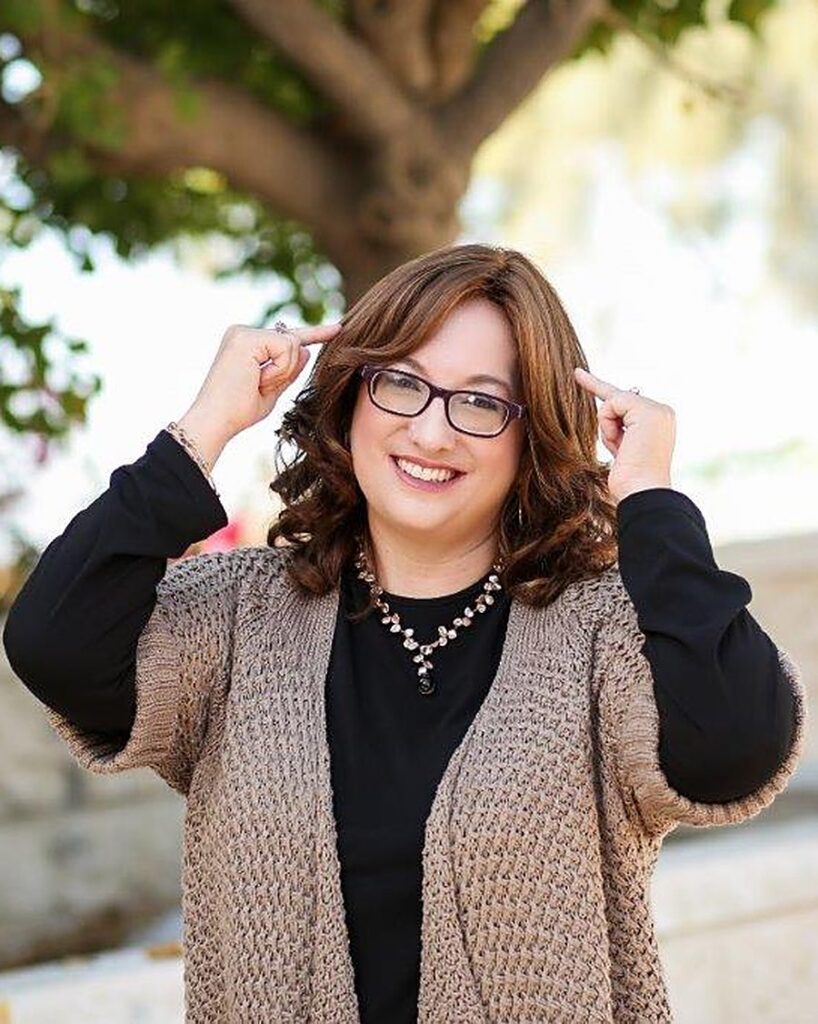
Why I am the one teaching this
I’m Rena Yudkowsky, MSW. I’m a professional memory coach and a geriatric social worker with more than thirty years in the field, and a Licensed Brain Health Trainer certified by Dr. Daniel Amen.
I teach memory improvement courses to midlifers and seniors. I have done extensive research and I understand the effect of the aging process on the brain.
Whether you are a midlifer with slight memory concerns, someone caring for a parent with a real fear of getting dementia yourself, or a senior with serious memory lapses, I can coach you through a program that will be effective, fun and transformative.
I'm not a doctor and I don't pretend to be one. I did not write this framework and I do not claim it. What I bring to it is thirty years of knowing which advice people actually act on, and which advice they nod at and forget.
Frequently asked questions
How long will it take me?
About four hours in total, and you choose the pace. Most people do one module a week.
Do I need any background in this?
None at all. It starts from the beginning and it is built to be understood the first time.
Will this tell me whether I have a problem?
No. Memory Matters provides education and coaching, not medical diagnosis or treatment. The assessments show you where you stand on the risk factors, not whether you have a condition. If you are worried about your memory, speak to your doctor.
I already have a diagnosis. Can I still take it?
Write to me first. This course is built for age-typical concerns, and if one to one work would serve you better I will say so. Book a free 15 minute call and we will work out the right place to start.
How much technology do I need?
You click a link and the module plays. That is all.
Do I keep access?
Yes. The modules and the materials are yours.
When is the live question session?
You will get an invitation when it next runs. There is no extra charge.
You cannot change your age.
You can change almost everything else.
Four hours, and you will know which of the eleven apply to
you, and what to do first.
Memory Matters provides education and coaching, not medical
diagnosis or treatment. If you have concerns about your memory,
please speak with your doctor.